
Diversity, Equity, Inclusion
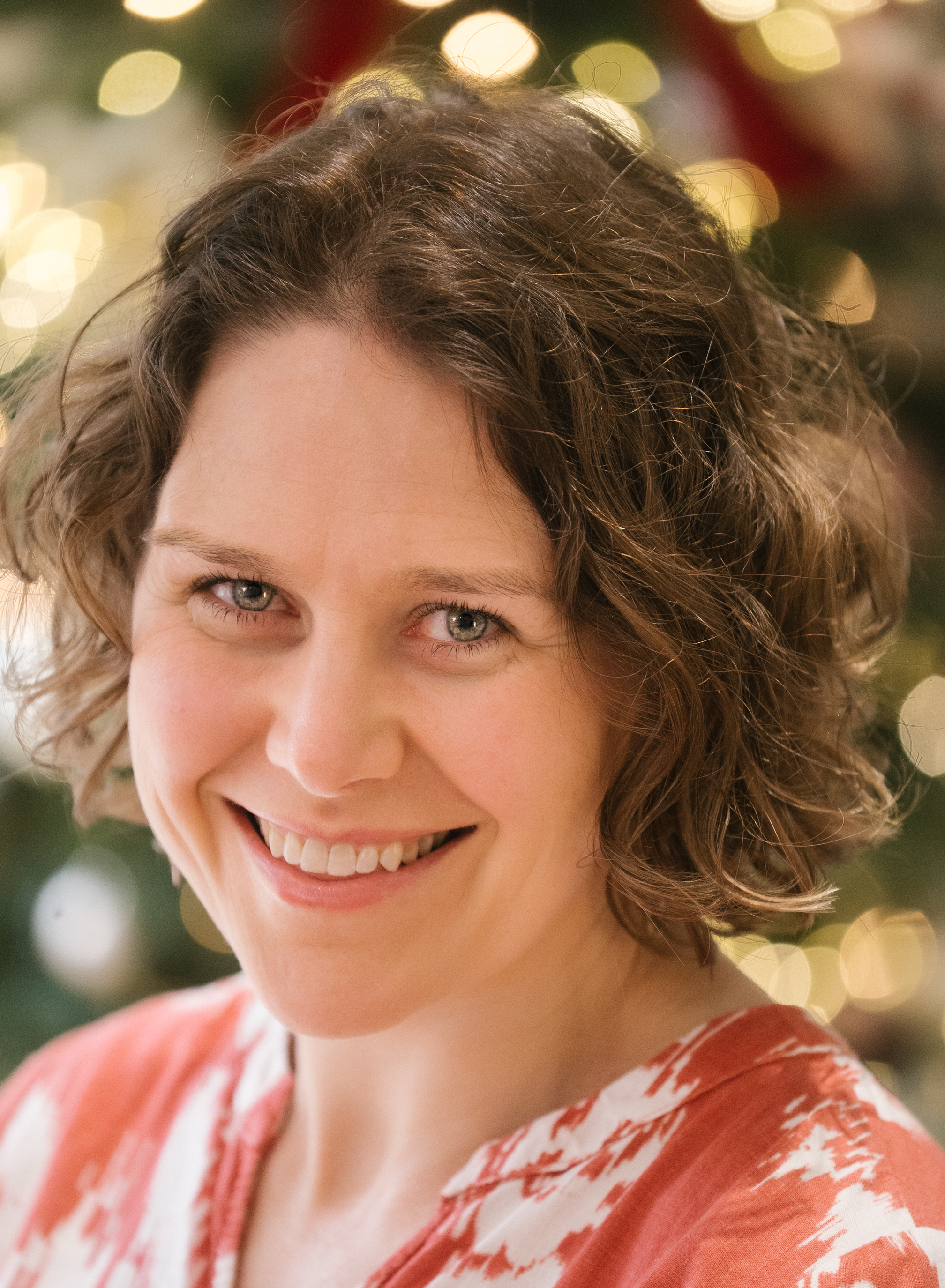
An Individual’s Perspective
A revisited and updated version of an article first published in October 2022. My review of this article comes a while after I attended the 2026 Health & Wellbeing Conference where professionals who are much closer to the health, wellbeing and inclusion challenges in the UK spoke and shared their data. Hearing the complexity of the data and hearing again about the scale of people struggling at work reminded me why I have turned from a Professional Services career to people, to coaching.

Why is Diversity, Equity and Inclusion important to me?
I want to tell you more about my whys. Why did Diversity, Equity & Inclusion (DEI) become important to me? Not just as something that is the right thing to do from an equality and human rights perspective, but also why equitable access means so much to me. So, in this edition I share some of my story.
The Early Years
I was born a white girl in South Africa. I lived in Zambia until I was seven where I played barefoot, snacked on cooked grasshoppers and, I am told, spoke with the accent of the person I was in conversation with (I was in an international school).
I still remember the shout of joy from my dad when Mandela was released from prison because that would be the start of a big change for me. My family moved back to South Africa soon after and I had my first experience of needing to adapt to a new culture.
Even though I was placed in a racially mixed school, after a while I began to understand that everything wasn't quite as it seemed. My white friends got older, the language of some (not all mind you) became more prejudiced and racist. As my friends from different social demographic, cultural and religious backgrounds became older I noticed increasingly how their lives were affected by our country's political history and I began to appreciate that political change is a complicated matter.
I was the child of a church leader who was committed to diversifying a white church, to bringing racial groups together where stories could be told, tears could be shed, and healing could take place slowly.
Young adulthood
I was a conscientious, diligent student and so was never quite sure what that meant for how my peers perceived and understood me. My most cherished friends were those who (on the face it) were not like me. Some weren't white, some weren't girls, some weren't academic in the traditional sense of the word, some didn't like sport, some had mental health challenges, most were more typical in their teenage behaviour than I was.
Fast forward a few years to where I left my country - a country that I loved and a country for which I had a lot of hope. It is possible that I ran from it. I ran in disappointment when my church did not adopt the Belhar confession (which had racial unity as a key theme). I arrived in the UK on my gap year. I was quite open to new learning opportunities and experiences and would like to believe I still am. One experience led to the next and eventually I stayed in the UK.
I initially worked in hotels and then as a private housekeeper and estate manager for over three years. This latter role offered me an opportunity to live a life at a slower pace and with a quieter mind. Eventually, I Au Paired for a year in England and in that year I also searched for a more stable and longer-term job. I joined a graduate scheme and trained as an accountant, and so my corporate job began.
Self-understanding in adulthood
I am now a mother of two. Becoming a mother broke me, or that is how I felt when it happened. We had years of quite severe sleep deprivation with my eldest. By the time my second child came along during COVID my capacity, energy and mental health were on a downward spiral.
Sleep, on its own, may have been a good enough reason for why things felt so hard, though I also went on to discover I am autistic. This was the first clue in a complex puzzle as I attempted to understand why my functioning was deteriorating year-on-year. What I experienced felt like chronic fatigue, though because I had an autism diagnosis this became the easy scapegoat for all of the many symptoms I was experiencing as I went from consultant to consultant trying to make sense of them.
I had the benefit of knowing me for much longer than the professionals who were trying to help me did. I knew autism couldn’t be the full explanation, because, surely, if I were autistic for all of my life and autism caused this level of tiredness and other symptoms, they should be familiar by now. I eventually went on to be diagnosed with hypermobility spectrum disorder, dysautonomia, MCAS and screenings of ADHD are indicative of it but I opted out of formal diagnosis simply because it would cost additional time, energy and money.
So here I was, a woman, a mother, someone with a growing list of diagnoses, struggling in my corporate career and always aware that the system of work made things much harder for me than they needed to be. Having received my labels so late in life, it was interesting to notice how people responded to them. Though I am generally glad of them, they do carry the risk of becoming restrictive and making a person feel like the labels should explain you.
In thinking about my labels, I certainly don’t feel like a mother one day and dysautonomic on another, with a little bit of autism coming through on the third. This whole collection of stuff is just me. And I, like many others who have ended up with chronic and neurodivergent labels, need an income. But the way I was expected to work made things worse. I knew it did, because I could remember better.
The environment was not incidental
It took me a long time to fully accept it, because I am not one to easily give up and for a long time, I wanted to be the person who figured it out, who managed to be well in the system. Eventually though, I came to accept that none of these diagnoses were the causes of the symptoms, but they did give me insight into why being in the environment in which I was working made me unwell. Across my life, where I had times where I was well and thrived, the variables were not the conditions, they were the constants.
Between my early exposure to systemic racism and my own experience of a somewhat atypical body and brain, I found myself spending more of my time questioning our work structures and cultures and how they impact people. There is so much that we accept unthinkingly as “the way the world works”. But in doing so we forget that we have built society with some of the world’s gravest mistakes as its foundations and because it is so very familiar, we are unable to see what might need to change to make things right.
Learning to hold both truths
I am slowly learning that a life that does not paralyse me with the scale of injustice and unfairness around me is one where I can hold both truths. I cannot change the world, and I am as able as another to choose to try. “The way things are” was made by humans and we can remake them.
It is very difficult to discern what can’t be changed from what could and should change. And even more than that, discerning when you are the person who should be doing something. Because there is more to be done than any one person could attempt to do.
For now, what my journey has shown me is that the medicalisation of people and the challenges people face around inclusion are linked to so many systemic factors: our early years, the ability to buy healthy food without fear of debt, access to affordable childcare, time for rest.
Our work is not done yet. For as long as we have systems, processes, policies - whether in government, work, healthcare or schools - that make it markedly easier for some to live a relatively meaningful and healthy life than others we still have questions to ask, stories to tell and changes to make.
There are always two or more ways of looking at something. It is exciting to see how far we have come, and we should remember to celebrate that it used to be very different in so many respects. It is incredible to think that there are many minds busy thinking through challenges around healthcare and inclusion right this moment – especially in the context of organisational design.
Disclosing is not always the solution
I just want to caution that we should not rush to solutions without listening to each other and understanding one another, otherwise we risk a situation in which good policy can become a tool through which some gain much and others are left exposed, disempowered and infantilised. Still misunderstood, but playing their role in contributing to organisational diversity targets.
It is only in 2022 that I, for the first time, felt I had no choice but to disclose struggle and eventually diagnoses as they kept piling up from that year onwards. Disclosing significantly changed my experience of work and I will continue to reflect on this. Suffice to say that the way in which the process of disclosure works did more to make me feel less equal than it did to make me feel included.
In a time when many feel a lack of autonomy and control in their job roles, this experience is even further affected as you expose all that is hard about your life to an approver who makes assessments over the reasonableness of requests that are your lifeline. Even while you are an adult who knows themselves, their capacity, and their ability better than others could judge from cursory reports written by OH professionals. In these situations, it can easily feel as if inclusion gets reduced to the very basics: being paid. One becomes thankful, not for potentiation, but because they haven’t stopped paying you.
Equity is not achieved when someone gets the job
Yes, equity must at its most basic foundational level include that all people have enough income (jobs) and resources. So that they can afford to live a healthy life. Though I am learning that an oft-overlooked part of equity, and arguably as important for societal reasons (more on this to come), is equitable access to environments where ill health is not a consequence of the work environment. Because this results in a circular power dynamic, where the ill health leaves one at the mercy of an employer to maintain the income that progresses the ill health.
This is not an easy thing to solve. I have said before and I continue to say, most of the individuals who were involved with my work and adjustments were progressive in their application of process and policy as we tested out new things. But this is why I know more needs to be done. Because what does that imply for the experience of those in organisations that do the minimum to remain compliant?
As a society we are becoming more unwell, our conditions more complex, and marginalised groups have not really felt truly included yet. The scale and complexity of it all feels overwhelming.
Listening and believing is the first step
Where can we start? In all this complexity something quite simple often gets lost. We need to listen.
Listen to and believe what the adults you work with are saying about their daily experiences. This is simple, but very hard to do, because we are wired to impose our experience of the world on others. It is hard to suspend your felt sense of what things must be like, but that is what we need to do to hear another. I believe that is one place where change could begin and be most powerful. It is the only way in which we can become allies of another.
For me, the way out was not working with reasonable adjustments, and I found that the NHS did not have an established protocol for the treatment I needed. I had to leave the corporate environment entirely. I am now doing much better than I have been for years.
Privilege should be acknowledged
Now that I am where I am, I am haunted by the question: “What happens to those where a combination of insurances and personal savings – things that come with some level of privilege – are not available in the way it was to me?”
Neuroconnectedness: Thought to feeling. Body to brain. Me to you. Us to our systems.
About the Author

Deoné Duffy is a coach and speaker who works with individuals, leaders and organisations who are ready to ask difficult questions, think differently and do differently.
Connect with me:
Website: www.deoneduffy.com
Book a Conversation: www.deoneduffy.com/book20
Contact Me: www.deoneduffy.com/contact
LinkedIn: www.linkedin.com/in/deoneduffy


Comments